What I Read in February 2026
February is the shortest month of the year, so it makes sense that, compared to my grand seven books read in January, I am only scoring three this month, right? Not only are there less days to fill with reading, but at the tail end of winter (and the heftiness of Mansfield Park), my reading has slowed down quite a bit. Yet, any book read is one to cherish and learn from. Here are the books I read in February 2026.
Mansfield Park, Jane Austen
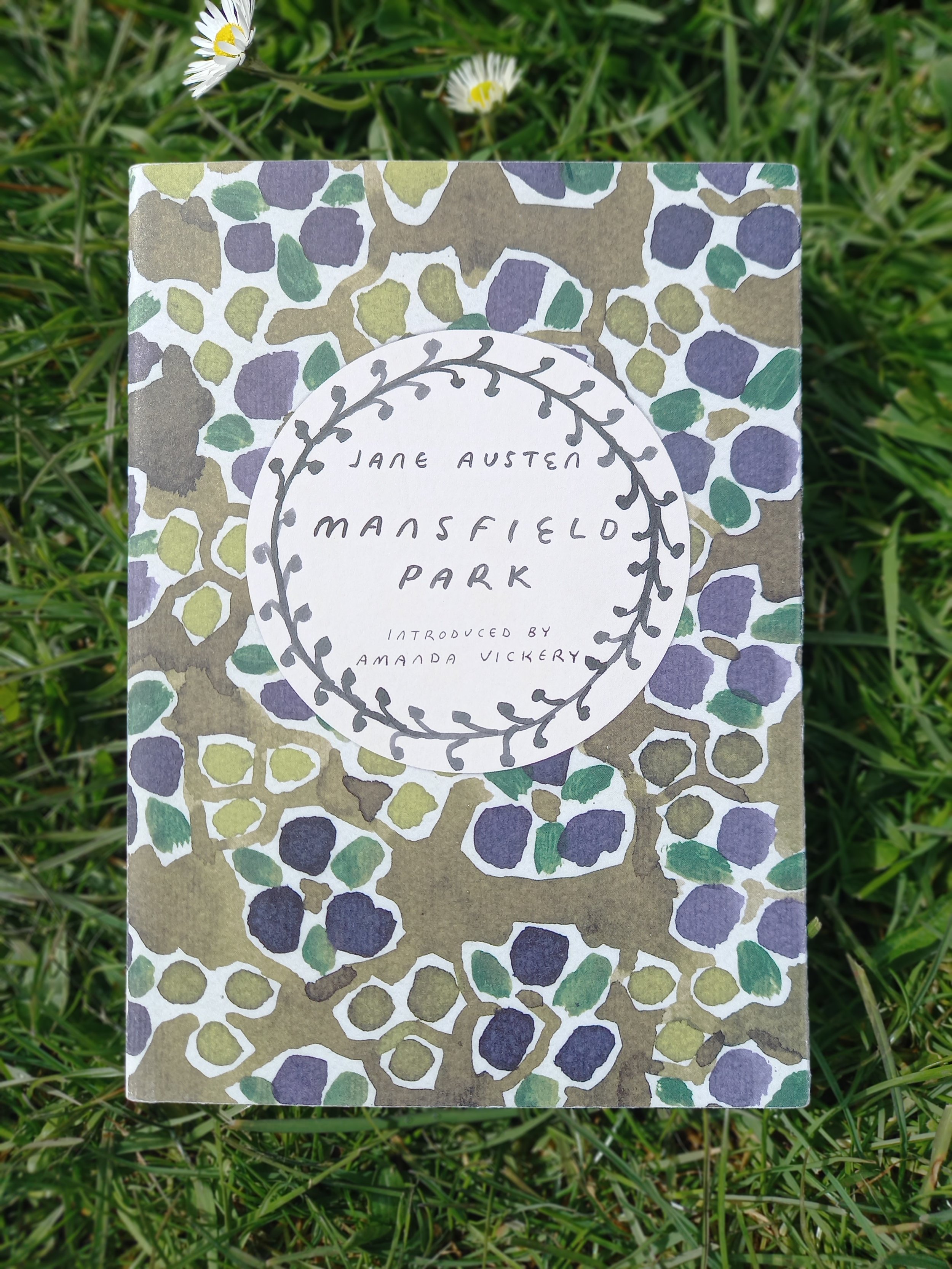
Mansfield Park, by Jane Austen. Publisher: Vintage Classics (2014). 560 pages.
Genres: fiction, historical, classic, literary, comedy, romance
Rating: ⭐⭐⭐
Austen’s third novel follows Miss Fanny Price, a simple and quiet girl from a less than fortunate family. Wanting to assist, Fanny’s aunt and uncle offer her a space in their grand home, Mansfield Park, hoping to raise her into becoming a promising young woman. Yet, constantly overlooked and forgotten, Fanny must contain her own emotions as she watches her new friends and family entangle themselves in the exciting presence of Mary and Henry Crawford.
From all six of Austen’s novels, Mansfield Park is the one I heard the least about. Having read Sense and Sensibility and Pride and Prejudice, settling down to read the third of her novels was surprisingly easy. It took me a while to sink into the language when reading S&S, but Mansfield Park showed Austen’s growth as a writer. She still uses long sentences, yet they have become concise and easier to follow. Perhaps there’s an element of my own understanding of her writing, but for a first time Austen reader, it will be easier to grasp than her previous two. Even still, I understand why, with the looming giants of its predecessors, praise of Mansfield Park is quieter. Fanny Price isn’t your world changing protagonist like the enamoring Elizabeth Bennet—she is the very opposite. She is quiet and obedient, the last to be remembered, and forced to amuse or assist the ones around her. Unlike many protagonists, she has little wants outside of having a happy, healthy life.
The slow pace of the story might lose a few readers, yet, the pace gives us room to learn about Fanny, introduce us to the other characters she lives with, and understand how badly they affect and oppress her. As a quiet and respectful girl, wanting nothing more than to live peacefully, it is shockingly funny when she becomes swamped in a cast of loud, energetic characters who push the boundaries of sensibility. The slow burn of getting to know the characters and seeing the gradually growing snowball tumbling down the hill made me ache for Fanny’s own wellbeing - an attachment to a character I wouldn’t have without intimately learning who she is.
What kept this story from being perfect for me was the love interests. I was enamored with Fanny and the chaotic friends she found herself with, yet when it came time for emotions to be unveiled, I found myself angry at all the side characters. No one was worth Fanny’s sweet soul! There were no OTPs I was pining for, and no matter the direction of the ending, I knew (and was right in thinking so) that it wouldn’t be a satisfying ending. Despite it, I still enjoyed Mansfield Park and recommend it to anyone who struggled with Sense & Sensibility. The whooping 500+ page count allows for a closer delve into the Georgian lifestyle.
I believe this slow pace is a lesson in tension and connection. With a somewhat slow and mundane story, the crawling pace allows us to foresee the outcome of each scenario, makes us sit beside Fanny as she endures embarrassing and heart-breaking moments, and gives us time to bond with our humble heroine in a way that Pride and Prejudice and other fast paced stories tend to skip.
The ADHD Artist, Earth to West
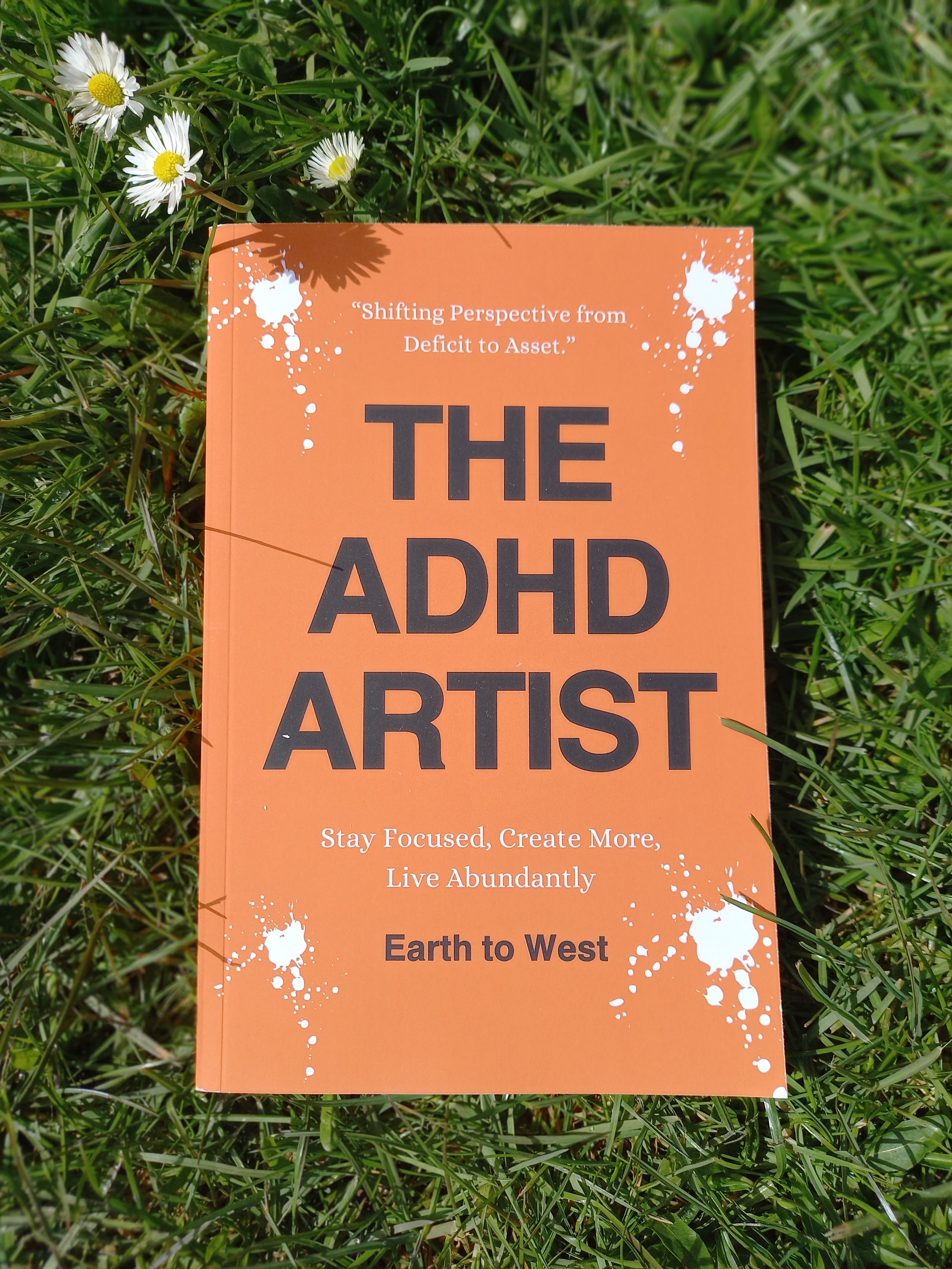
The ADHD Artist, by Earth to West. Self published (2024). 297 pages.
Genre: non-fiction, self-help, art
Rating: ⭐⭐
A positive guide for all types of artists that struggle with ADHD. Providing information and suggestions on how to navigate the constraints an ADHD brain creates, The ADHD Artist helps explain the difficulties of ADHD and assists in redirecting them to nourish a creative life.
There are a plethora of ADHD self-help and information books out there, and as someone with a fluttering attention span, researching all the options was not something I wanted to do. The ADHD Artist caught my eye because of its niche audience. The prospect of a book tailored towards my main issue with ADHD was appealing. It was positive, informative and easy to read.
Yet, it was more interesting than impactful. The book was written for its target audience: people with ADHD, and it certainly shows. It has short chapters, large text, and doesn’t allow itself to stray too far from its points. I give it points for keeping us on track and keeping scientific jargon to a minimal. Yet, the repetition. If there’s anything to choke the attention of someone with ADHD, it is monotony and the lack of excitement. After a while, it felt like we were going in circles. “Here is problem X. Use solution Y to help.” Almost every new topic had this exact formula and had the exact solutions spelled out multiple times for each problem. Halfway through the book, my eyes were glazed over. I skipped pages; I saw the “Pomodoro technique” appear for the sixth time and knew I was safe to skip ahead while the same broken record started scratching in the background. Reminding the reader occasionally is fine, if not encouraged, but every single point? Personally, Pomodoro and mind mapping do not work for me, so seeing it again felt like another gut-punch of irritation.
Alongside this, the science and case studies felt thin. Three examples of successful ADHD people were presented, and two of them are professional athletes. I’m sure many would argue that they aren’t quite the representatives of “artists”. This book has great intentions, but it is less of a guide and more of a list of suggestions to better one’s habits.
The Gift of Dyslexia, Ronald D. Davis
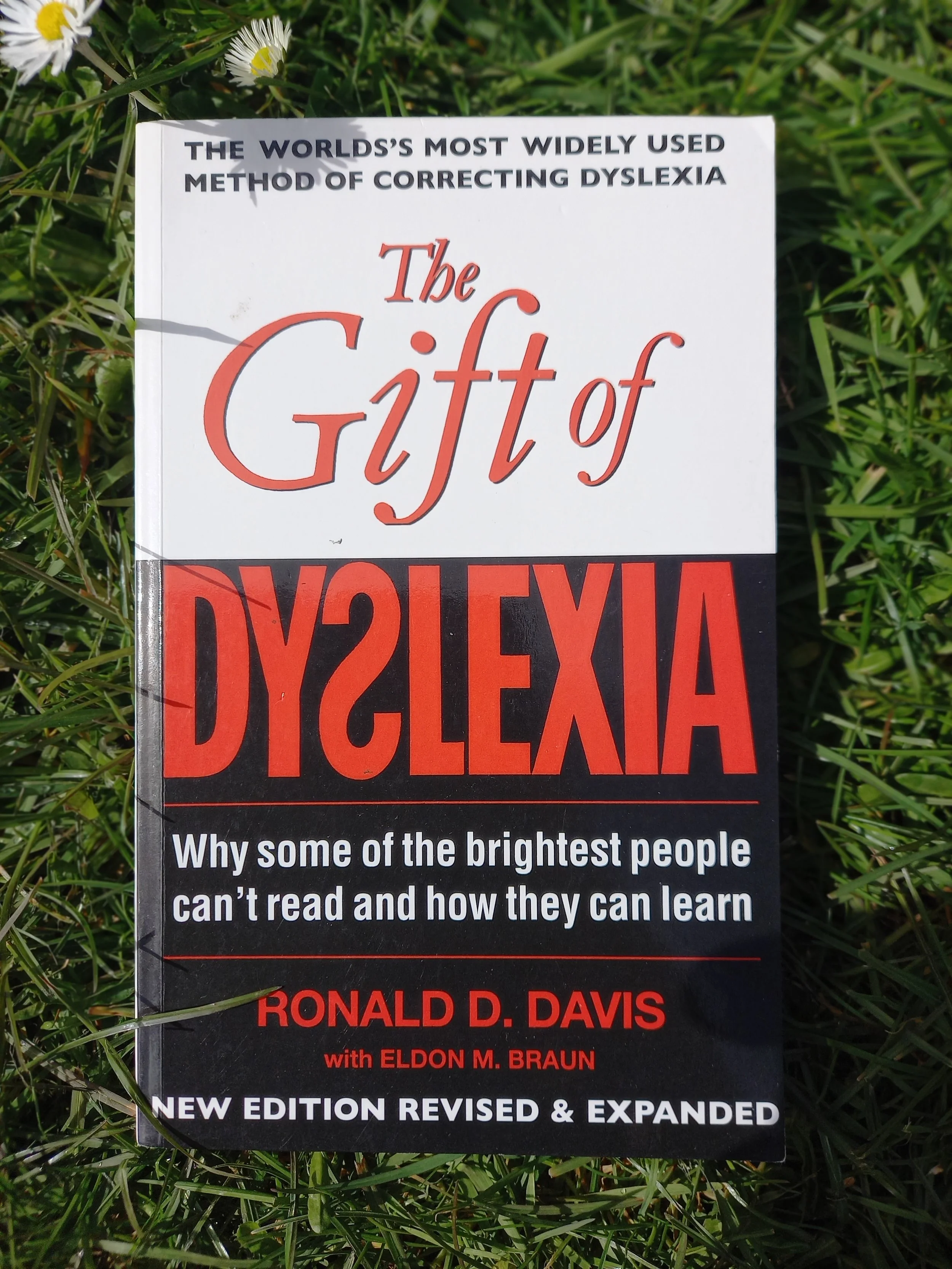
The Gift of Dyslexia, by Ronald D. Davis. Publisher: Perigee Trade (2010). 288 pages.
Genre: non-fiction, self-help, education
Rating: ⭐⭐⭐
An interesting analysis of how dyslexia emerges and appears, and the proven ways of correcting it.
As I read The Gift of Dyslexia I felt hopeful and inspired. Similar to The ADHD Artist, the positive tone and scientific exploration is not one of “you need to change”, but a way of understanding the complex brain that develops dyslexia as a coping mechanism. Praising particular traits and explaining why brains can be lured down the hazy road of dyslexia was one that gave me comfort and answers. I came out of this book feeling inspired that I could iron out the difficulties dyslexia creates for me. I am not dyslexic, I am someone struggling with dyslexia. That message, which is shown throughout the book, was uplifting and encouraging.
However, The Gift of Dyslexia comes in two halves. The first shows us and explains the ways in which dyslexia develops and presents itself. The second half goes in depth into the method of removing dyslexia. This section was fascinating to read. It provides an entire script to follow if readers wanted to attempt unpeeling the disorientation dyslexia produces when in challenging scenarios. Reading these sessions were fun, yet, it was essentially me watching someone else develop coping skills I wanted to have. Solitarily reading this section felt a little useless—it is a two person task. Towards the end, reading multiple different sessions of adjusting someone’s dyslexia did grow somewhat aimless in my eyes. Knowing the method is different from doing the method. Outside of these very professional examples, there is little advice for everyday changes.
With this short month over, I am looking forward to March, where the return of the sun and a towering TBR pile awaits me!