What I Read in March 2026
As we head into spring and the sun stays with us longer, reading across this month has been a blast! March has brought me a bounty of new, modern horror writers to freshen my palate and carry me through a fruitful month of writing. Let’s explore the highlights!
At the Bottom of the Garden, Camilla Bruce
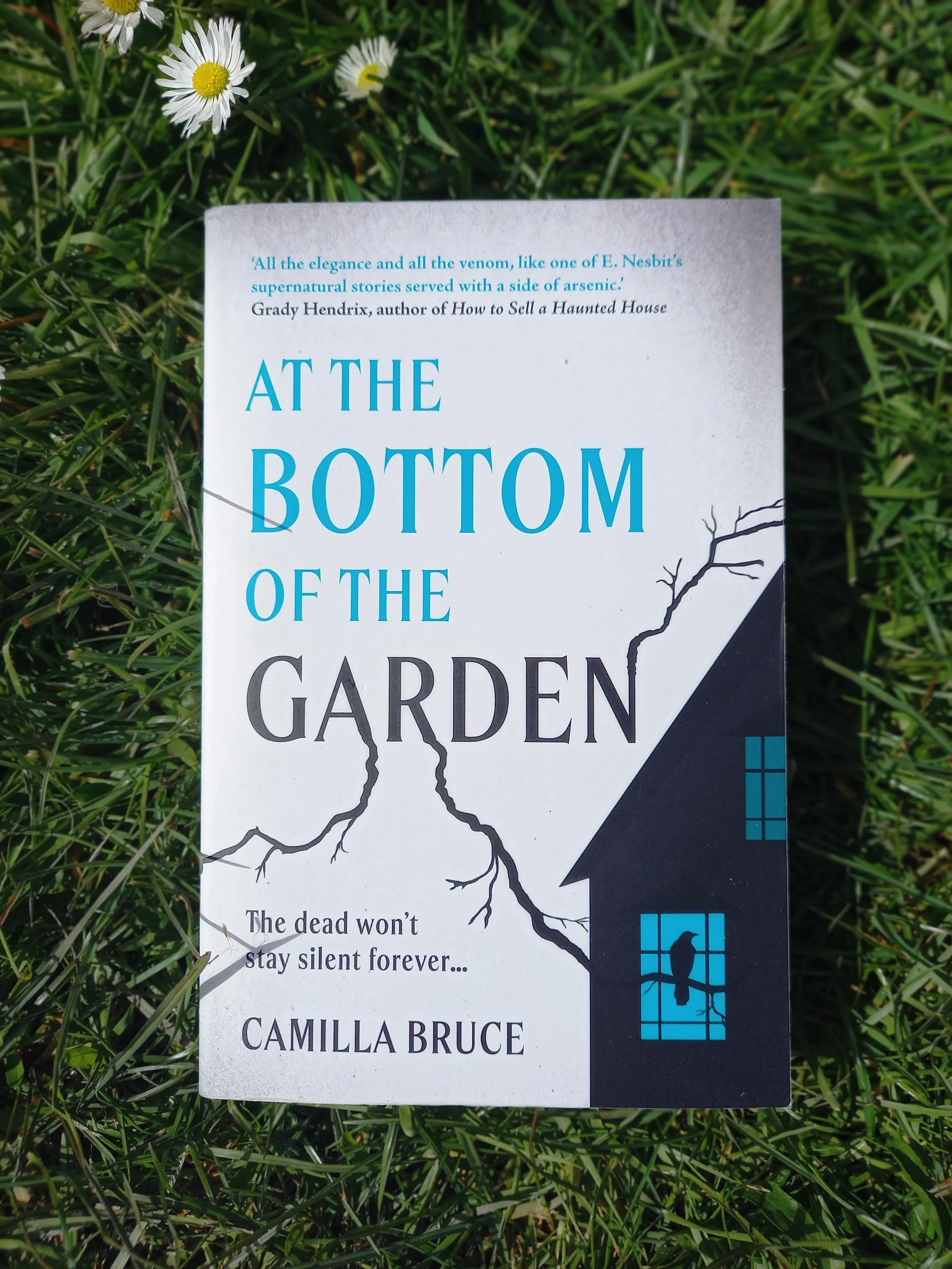
At the Bottom of the Garden, by Camilla Bruce. Publisher: Magpie (2025). 368 pages.
Genre: fiction, horror, fantasy
Rating: ⭐⭐
A Series of Unfortunate Events becomes lethal in At the Bottom of the Garden. After her brother and sister-in-law die in a tragic accident, a murderous aunt adopts her two young nieces in hopes of attaining their wealth. Yet, after exploring their new home, the two girls slowly uncover the skeletons in their aunt’s closets, and fear for their own safety.
The premise of this book was perfect: girls trapped in a home under the oppressive care of their strange aunt, finding disturbing hints to her bloody past. I was ready for tension, paranoia and a mad fight for survival. Through multiple first person perspectives, a promise of uncovering layers of mystery started off exciting, but quickly descended to a story which felt more suited for YA audiences than a gritty horror thriller.
The characters felt very two dimensional—particularly the two girls, whose perspectives felt too similar to need both viewpoints present. Focusing on one over the other might have helped the mystery last longer, stew tension as the girls failed to see eye-to-eye. Following both at once allowed all the intrigue to have immediate answers.
The murders, disgusting and terrifying, once revealed, did not add any tension. Simple arguments stopped the girls from fighting back against the aunt. Tension fizzled, but never grew to anything alarming. The aunt’s character, so focused on her diamond business and feeling justified in her past murders, felt almost comedic whenever she spoke about her troubles.
Dumbing down police and government officials just to avoid easily solving the situation, such as responding to a call from the girls, stating they are afraid of their new aunt, with doubt and a ‘Call me if it gets worse’, felt infuriating. It felt like trapping a bug in one’s hand—desperately trying to keep all the characters in one place by thin excuses. The tension won’t grow if the law is incapable of doing anything… isn’t there a saying that if something can go wrong, it will go wrong? Easily escaping situations loses any need to worry. As fun as it was to uncover the ghosts and learn about the girls’ secret powers, it was just that—fun.
An interesting concept, but one that felt misplaced among an adult horror audience.
The Possession of Alba Díaz, Isabel Cañas
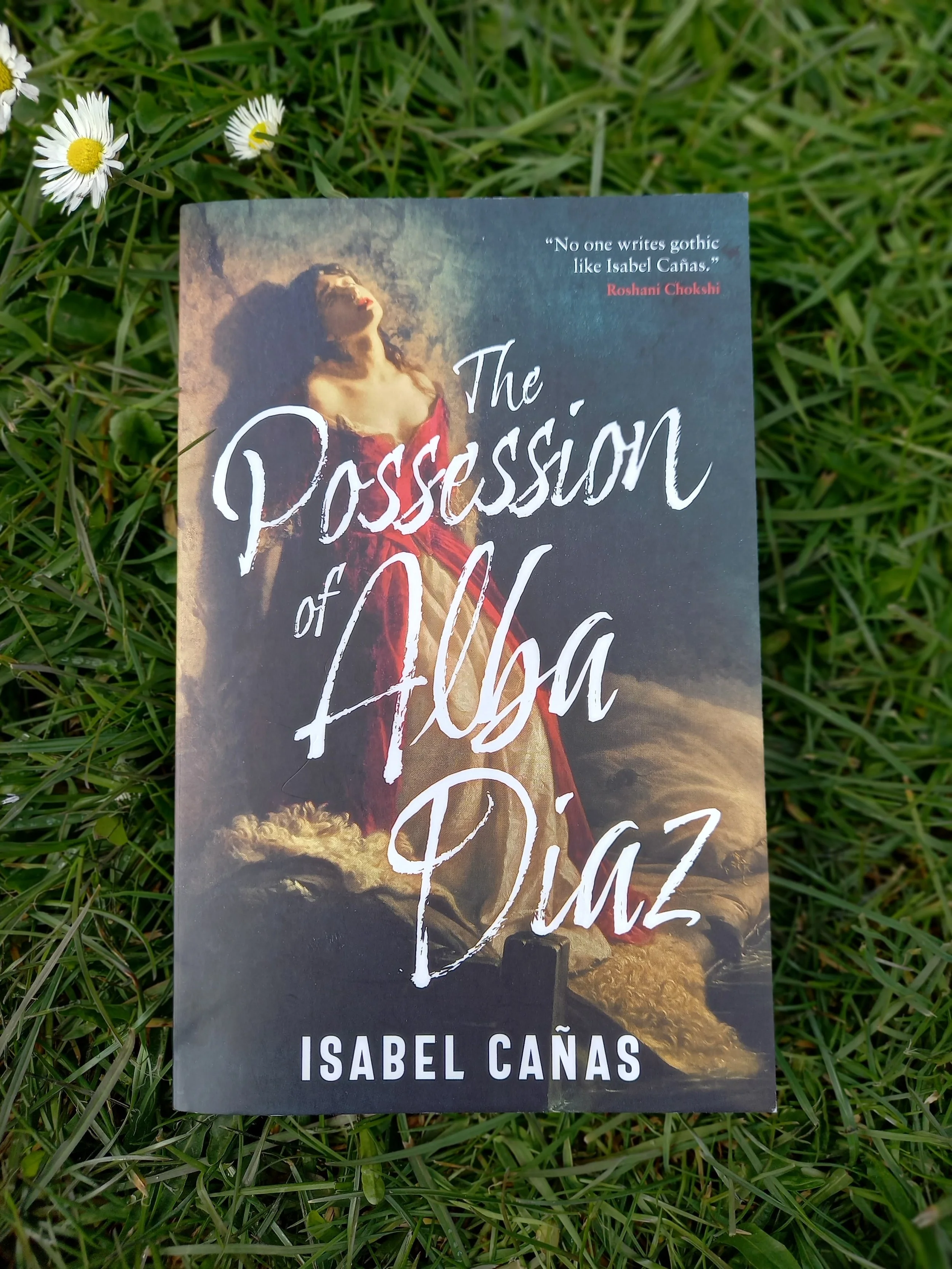
The Possession of Alba Díaz, by Isabel Cañas. Publisher: Solaris (2025). 400 pages.
Genre: fiction, historical, horror, thriller
Rating: ⭐⭐
In the 1700s, a family must escape a plague-ridden city to seek safety in the mountains, returning to the very mineshaft Alba Díaz was once found as a child. Far away from the risk of disease, Alba should be healthy, yet something dark haunts her. Teaming up with a forbidden ally, Alba must discover what really lurks inside her.
The time period, a town singed with plague, an isolated mining settlement—this book promised many aspects which directly correlates to my own current WIP. Cañas creates a dark and dripping world, festering with evil and oppression, one that sets the ball rolling to see just how far these characters will descend. The rich prose is beautiful and poetic, capturing vivid scenes and showing the characters’ faces through her description as though I ran my own hand across their skin. The European-adjacent world building felt fresh, and learning about a new, fictional culture with its links to religion was something that hooked me from the start.
When it comes to demonic possession, the current stereotypical appearance of them is reviving The Exorcist’s string of vulgar insults and omniscient jabs. Manic grinning, impossible body contortions, and unsettling acts. It is rare to see a possession done differently than this. Unfortunately, The Possession of Alba Díaz didn’t escape this over-done representation. A demon saying bad things and laughing? I’ve seen it done before. And, coming from a book where “possession” is literally in the title, I was expecting some creative play with how this demon manifests and what it does. With the possession being the source of all tension, having a variation of The Exorcist felt disappointing. No new ground was explored, and having followed in the footsteps of former demonic possession stories, the plot felt predictable.
Despite the attention to the world, the demon/possession itself felt copy-and-paste. Including Spanish-inspired folklore and supernatural beings might have elevated this story, and having the demon be as distinct as the setting would have given The Possession of Alba Díaz its own, unique air.
How to Survive Camping: The Man with No Shadow, Bonnie Quinn

How to Survive Camping: The Man With No Shadow, by Bonnie Quinn. Publisher: Simon & Schuster UK (2026). 336 pages.
Genre: fiction, horror, fantasy
Rating: ⭐⭐⭐
Kate is the manager for Goat Valley’s campground. Not only does she have the task of protecting the campers on her land, but she must satiate and eliminate any dangerous, fae-like creatures that inhabit this realm. With a wide range of folklore monsters, Kate must do everything she can to survive when the Man With No Shadow seeks her place.
How to Survive Camping is a fun, fresh horror story of folklore and monsters. Drawing inspiration from the Monster of the Week sensation, where we meet new, eerie creatures, the American campground adds a fresh coat to the genre. The range of monsters were overall interesting and fun, while some were simply (and quite literally) Santa Clause. For lovers of folklores and monsters, expect a mixture of new ideas and the reintroduction of pre-existing myths to both enjoy and experience afresh.
This book is an easy read lead by an atypical protagonist. Kate is emotionally disconnected, brought up to inherit her role as campground manager, and must do anything to appease or defeat the evil spirits, even if it means murder. Due to this, she makes for an interesting character; she has flaws to grow from and a history to unravel if readers want to understand what made her who she is today.
The writing was enjoyable—enough horror, enough tension, but still with a level of adventure and humour to make it an easy read. The introduction to new creatures or characters felt episodic, showing readers a wide variety of creepy folklore and faeries, and due to this, made the world feel alive with its unearthly inhabitants. Not only does it give the campsite its own sense of character, but also showed Kate’s knowledge of the dangers and behaviours lurking across the land, making her a powerful and interesting protagonist to the story.
Yet, in such a short volume and with so many creatures to pack in, the campground itself with its regular, human campers felt empty: aside from stories of interactions or incidents with the campers, we never got to see the fields coloured by canvas tents or queues outside the only shadow, towels draped over their crossed arms. We didn’t see the prey these otherworldly monsters stalked, nor saw green patches in the fields as these campers deserted after all the attacks.
Sure, Kate is so focused on dealing with the monsters that stopping and appreciating the huge community collecting on her land wasn’t really possible. I can argue that Kate has seen it all before—she has adjusted to the strange sounds of the forest and the beautiful sights wild land permits. Still, who is Kate writing her ‘How to Survive Camping’ guide for?
Originating as a web-based story, uploaded in episodes, the adaptation to a novel format was a good effort—yet I believe the novel format can restrict the nature of How to Survive Camping’s story. Set up to be a continous journey, not one that follows typical novel narrative structure, the ending didn’t feel as satisfying as a one-off novel might. While most novels tend to wrap up nicely, progatonists’ flaws being challenged and usually fixed, Kate’s flaws do not get addressed. Sequels are in the works, set to be published later this year, yet I can’t help but feel slightly disappointed at Kate’s lack of pressure to grow as a person. The overall lesson of the story felt heavy on her relationships with others, and as a character who struggles to keep and nurture those said relationships, winning the Big Climactic Fight at the end allowed her to dust the dirt off her hands on any personal growth. She won—she proved her strength through muscles and knowledge, why question her unfriendly personality when it didn’t come in useful to surviving another day? I can only hope that throughout the arc of the series, Kate can recognise her evident flaws and start to grow from them.
For a horror novel, it felt creepy but fun, and Kate’s stoic reactions to troubling events felt comedic to read. For a reader who is interesting in a lighter, yet longer horror series, How to Survive Camping feels like the perfect spot for you.
Scuttler’s Cove, David Barnett
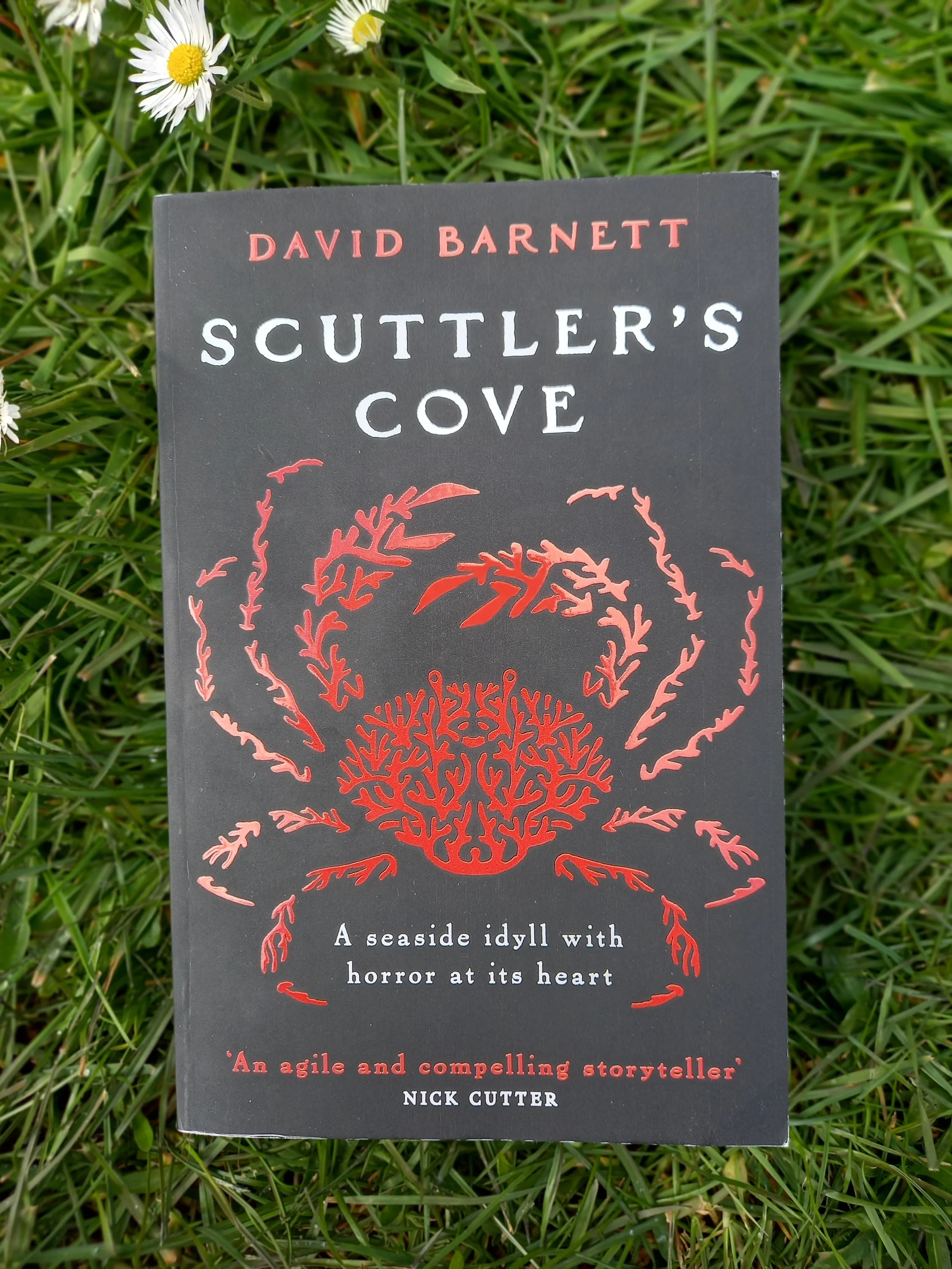
Scuttler’s Cove, by David Barnett. Publisher: Canelo (2025). 368 pages.
Genre: fiction, horror
Rating: ⭐⭐
As second-homers and Airbnb’s take up the scenic coastal town of Scuttler’s Cove, the eerie locals start to scare the new, rich inhabitants. An exploration on the problems caused by homes being bought from the locals, we explore the land’s dark history and rituals come alive.
Let’s begin with the positives: this book made me realise I don’t indulge in British horror enough. The first chapter hit me with a wave of discomfort, not because the horror was through the roof, but because it felt so close to home. The language the characters spoke, the very specific British details—I was struck with how real this story felt. American horror to me feels slightly magical, slightly safe. Because I have never been to the States, only having seen dramatized versions in media, reading American horror feels fictional to me. It’s not my usual world, so it’s safe. Scuttler’s Cove gave me those classic British concepts, such as the character saying, ‘Oh, babes,’ in the response to awful news in a typical British manner. Pubs, chippy’s, and seaweed soaked, grimy harbour towns are such British characteristics that give hints at an authentic British setting. This fresh horror story taught me the impact of setting, and the closer to home a story hits, the scarier it feels: suddenly, it felt like the same horrors can easily have happened to me.
While I was enamoured by the tight bolts of the British setting, I found other areas of the writing lacking. The characters, pacing, and horror were soft and loose. Before the tension grew too high, only a few chapters in, one perspective from the past tore down the curtain covering the story’s brewing mystery. It pretty much explained the history of Scuttler’s Cove (minus a few intricate specifics) and from there, I guessed the progression of the plot. I was waiting for the characters to figure out the answers, and any plot twists, any deviations from my predictions, unphased me, because already figuring out the core history meant it was just adding wallpaper to the building.
The characters had somewhat shallow personalities—they had no driving flaws nor burning desires. Without lessons to learn or space for growth, I found it hard to rally behind their struggles. Once the protagonists had settled into Scuttler’s Cove, the only pressure against their characters was the strangeness of the land and the locals, which I had the answers for.
As for the horror, without compelling protagonists to root for, it felt hard to really feel the threat of danger. I love horror, and engage with as much horror media as I can, and I believe Scuttler’s Cove to fall outside of this genre. When paranoia is the main form of horror, seeing the antagonists—the rich Londoners—receive the brunt of the horror, it didn’t seem like something to be afraid of. It wasn’t really affecting the “good” characters, sooo…
My last critique is a heavier influence on my ratings. Sexism. I haven’t spoken about Barnett’s dialogue on classism and landownership, but his approach to the cast of rich Londoners who inhabit holiday homes in Scuttler’s Cove comes in a very black and white viewpoint. They are seen as bad, disruptive and uncaring. I am not defending the upper class, but what I did notice is that this negative characterisation appeared heavily in the women. We are constantly reminded of their appearances—how they have Botox, have plastic surgery, fake boobs, wear revealing, designer clothes. They are written as shallow and weak, and out of the few moments of horror throughout the book, it is the women that get injured. I can’t remember the men’s descriptions. I can’t remember who they are. Whenever anything scary happens, it is the men who keep their cool, converse rationally, are in control. I believe Barnett wasn’t conscious in these designs, but it did sit wrong with me how the negative, rich traits appeared more in the women—making them seem worse than the rich men—and the ending came with a speech in which men were claimed to be the blame for everything terrible in Scuttler’s Cove. YEAH, FEMINISM!
Not only were men not the blame of all evil—revisiting a few of the Major Spoiler events causing this situation, in which it was implied a female character accelerated the situation—but lumping all men together as “bad” is sexist once again. It is heavily herding men and women back into their gender expectations—women are about love and wanting to be pretty, men only care about success and sex.
I’m not here to slap a wrist, but opening this conversation is important in understanding what makes a feminist story actually feminist. Feminism calls for the acknowledgement of the struggles women go through, and asking for assistance in gaining strength, not to destroy the opposing force.
The Vampyre, John Polidori
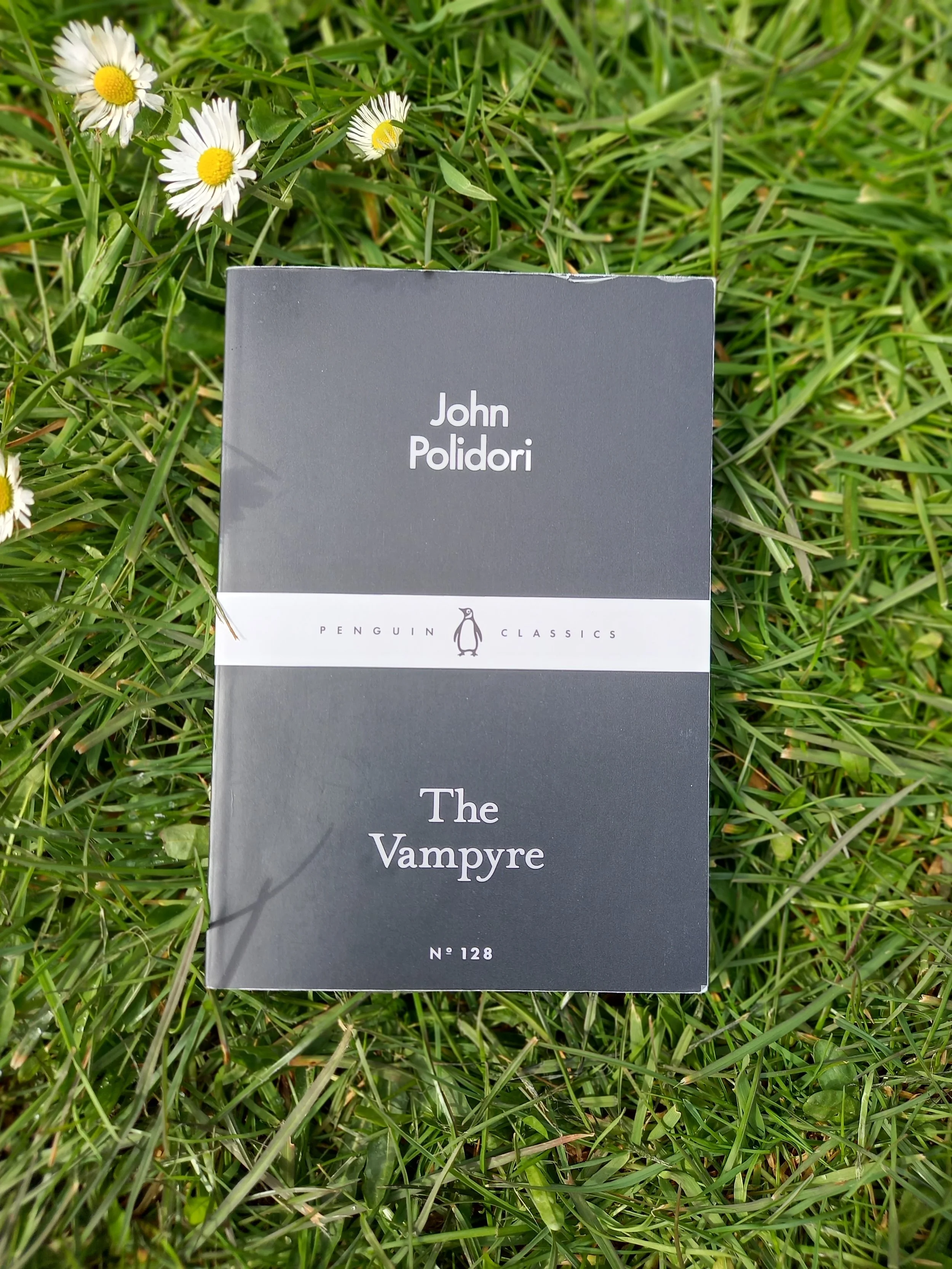
The Vampyre, by John Polidori. Publisher: Penguin Classics (2025). 128 pages.
Genre: fiction, short stories, classics, horror, vampire
Rating: ⭐⭐
Three dark short stories about vampires: the iconic ‘The Vampyre’ written by John Polidori from Mary Shelley’s famous group, Karl Adolf von Waschmann’s ‘The Mysterious Stranger’, and Bram Stroker’s ‘Dracula’s Guest’.
I will admit it: the history surrounding ‘The Vampyre’ might be more interesting than the short story itself. Rumoured to be a scathing interpretation based on Lord Byron, Polidori writes about a strange man who joins and befriends the narrator. The writing style might not be for all readers—when I first sat down to read this collection, I thought: ‘100 pages? I can read this in one sitting!’ I did not, in fact, read it in one sitting. Polidori dives straight into long, complicated descriptions. If the two-hundred-year gap between our vocabulary didn’t already create a higher need for close attention, then his tangled, complicated writing style does. I found myself rereading lines, muttering the words under my breath just to decrypt his meaning. Upon the first page, I got whiplash from the intensity of the writing. Polidori’s pacing was enough to cause travel sickness: one moment, his long sentences conveyed every minute detail of a party attendant, and then next, we are blinking awake in Greece and later, a cave surrounded by bandits.
A good chunk of this story is the narrator’s friendship with this strange lord—recording unsettling habits, uncanny appearances and unhuman mannerisms. Then, we have the following vampire element: tense horror and fear catches up to our innocent protagonist, and the exciting journey of watching them understand the nature of the lord is one masterfully adapted in Dracula. ‘The Vampyre’ was fun, yet unpolished.
And that is only story one. The other two, arguably better written and with more interesting settings, had a repetitive nature to the vampire genre. While the writing became easier to digest, I found myself struggling more. An arc appeared throughout all three: the introduction of a mysterious stranger or area, an attack is made or an illness grows, and then the narrator finally comprehends the undead creature among them, and fear overwhelms them.
My current WIP, ‘Consumption’, is about vampires, so any story featuring my favourite fanged friends is one I am tearing open to read. Yet, after reading Dracula and other volumes of vampire fiction, the three short stories, though historically informative, weren’t ones that would impact the identity of my story’s vampires. I am glad Dracula fell into my hands when it did—the unparalleled vampire novel is one I will cherish for a long time. But, to visit the past and the birth of vampire stories, I recommend reading these stories with breaks in between.
The War of Art, Steven Pressfield
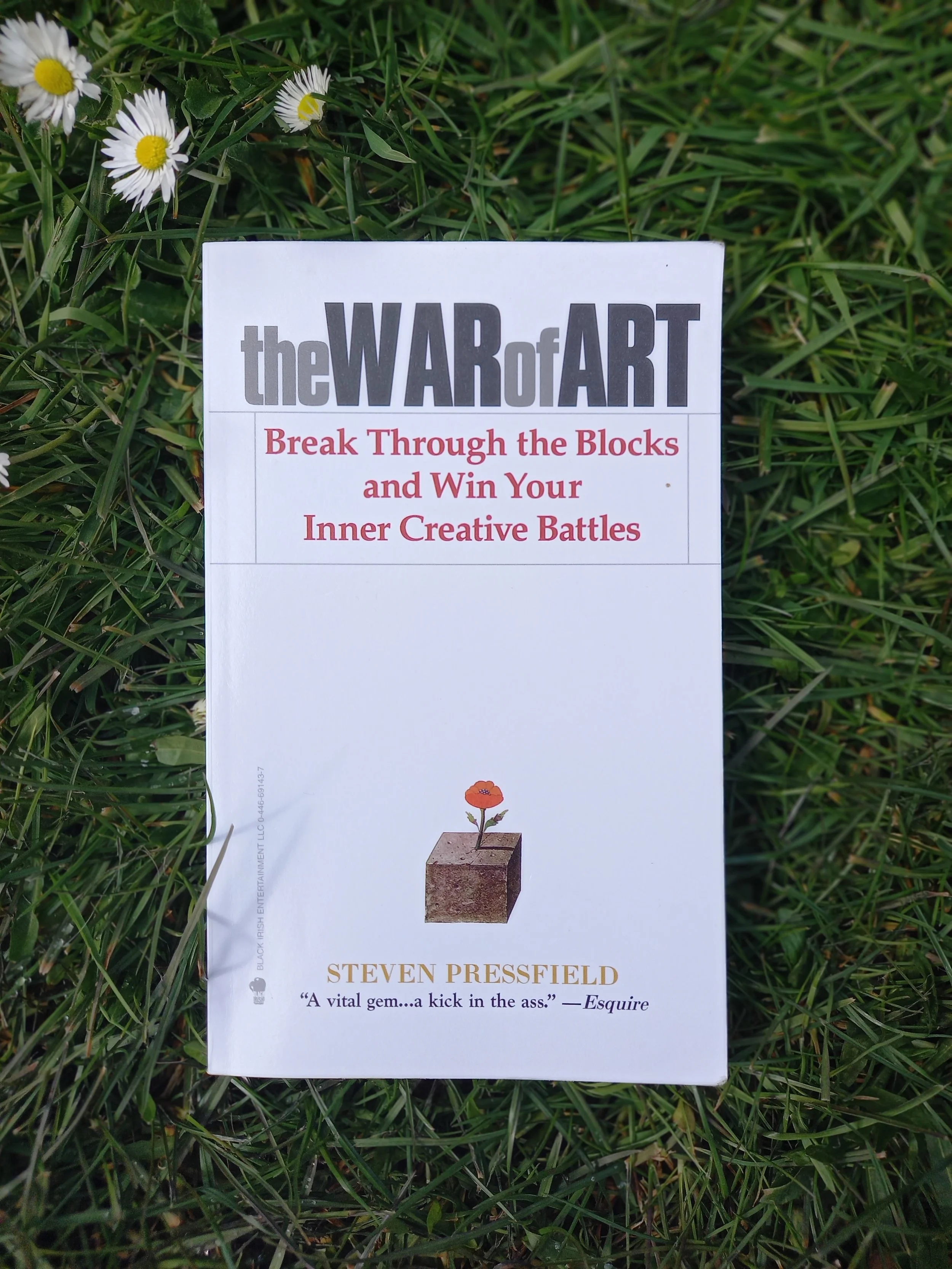
The War of Art, by Steven Pressfield. Publisher: Black Irish Entertainment LLC (2012). 190 pages.
Genre: non-fiction, art, self-help
Rating: ⭐⭐⭐⭐
Not to be confused with a similar title on mastering war tactics, The War of Art is a short, impactful book designed to inspire artists to charge at their desired medium and to help create ideologies to commit to your artistic projects.
In my short history of engaging with writing guides, this one acts as a great slap in the face—fresh like cold water or awakening like tearing open curtains on a sunny morning. Pressfield introduces us to the concept of ‘Resistance’, and how it forms a solid road block between us and our art, and explains how it appears, what it does, and how to get past it. Where other books of this style might be gentler in their approach to encourage writers to the page, Pressfield lays out the determination and self-restraint needed to create.
This short and snappy book is a great wake-up call to any artist struggling with their creation. He is masterful at twisting daunting mindsets into simpler ones. I have always struggled with the idea of committing to a daily writing routine, yet he presented an alternative that has made sitting down to write a lot easier to approach: to break the streak of inactive days. Writing, and any art form, grows harder each day you do not actively engage with your artwork. Looking back on my writing diary, I tend to write 6-8 days a month. Now, I can see those large gaps between my days and feel eager to write, to snap those long strands of inactivity into shorter chunks.
In The War of Art, chapters are sometimes no longer than half a page long. Reading is easy, and each point is concise yet striking. A huge recommendation for anyone needing that shove to pursue what they love.
The Only Good Indians, Stephen Graham Jones
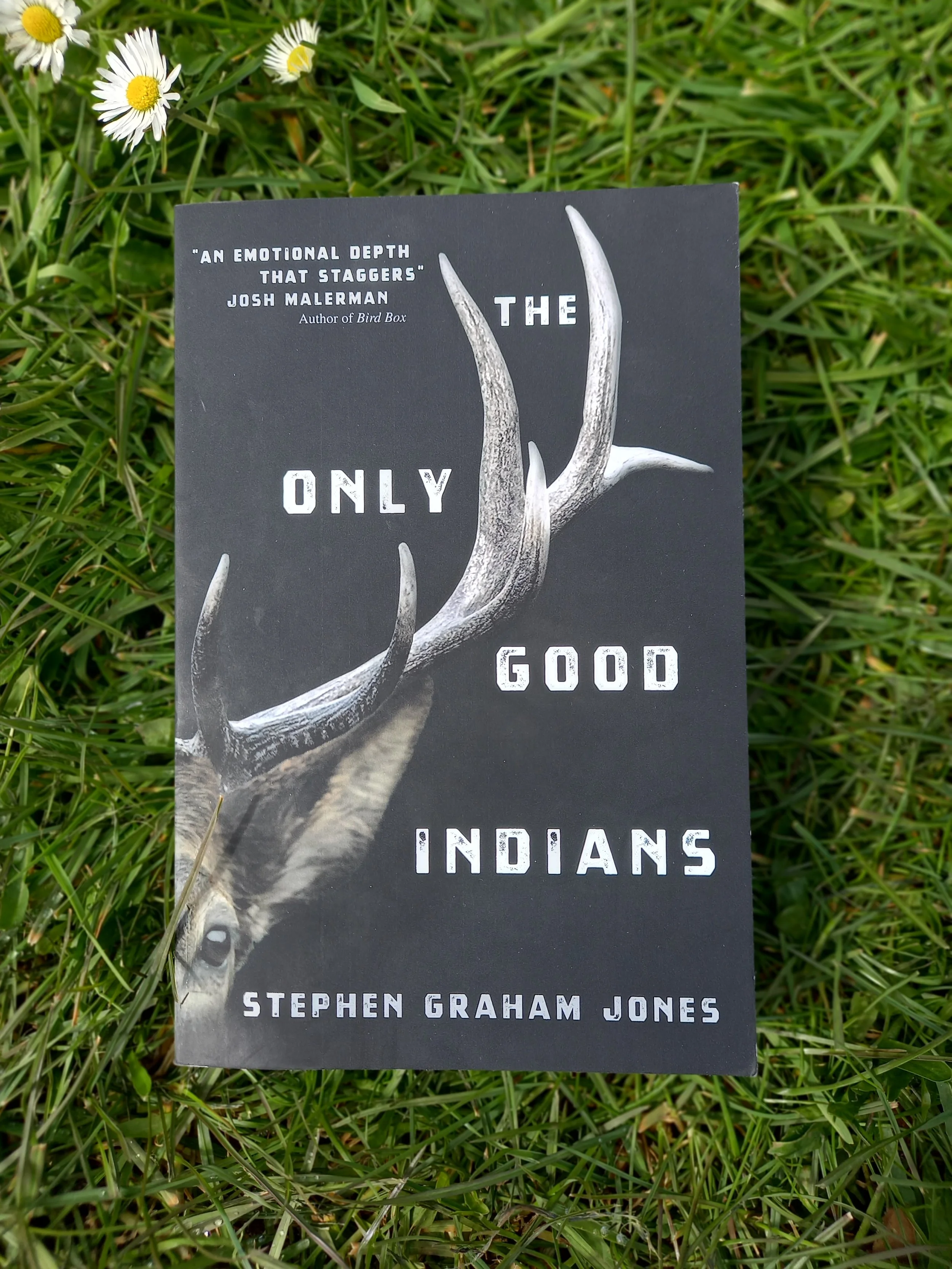
The Only Good Indians, by Stephen Graham Jones. Publisher: Titan Books UK (2020). 357 pages.
Genre: fiction, horror, thriller
Rating: ⭐⭐⭐⭐
Ten years after a hunting trip, a ghost starts to slither through the lives of the remaining Blackfeet hunters, reviving guilt, grief and tradition in this emotional, horror book following the lives of modern Native Americans.
After reading The Babysitter Lives, I was tentative to return to Jones’ work. From my four star rating, you can probably guess that my negative opinion on Jones’ former book was not due to his skills as a writer (I am so not a slasher fan). The Only Good Indians was beautiful, both in story and writing. An emotional tale of guilt and tradition, with some of the best, most vivid writing I have read in horror for a while. To me, almost everything aspect of the story was perfect. The cast of characters had depth, each new perspective one I grew to understand and care for, even if their morals were less solid than the last. Jones’ creative play with the language, exploring tenses, perspectives and voices, was one I was captivated in throughout the entire novel. I never knew the turns and felt each harrowing event physically. I loved it. Pure and simple. Do not be deceived on the length of my following points, for the good overruled the minor spoils—I loved it!
I was thiiiiis close to giving it five stars. This close! But, the only compliant I have for this gorgeous book is the American Overdosing. By this I mean there were a lot of references that any readers not keyed into American culture can feel bewildered by. Of course, a book about Native Americans, their history and culture, is going to be American, naturally. Yet, as a British writer and reader, I don’t know much about America outside of news, general history and media. I can watch TV and enjoy American YouTubers, but that won’t give me in depth knowledge about the intricacies of living there.
American horror is very American. Who’d have thought? Stephen King constantly shouts out American car brands, beers, actors, cigarettes… enough that when I hear the name ‘Buick’, I have no clue what I am supposed to be picturing in my head. I know nothing about cars. Jones falls into this habit, too.
One example of this is when a very specific nickname for motorbikes appears. There isn’t any further description of the bike. At first, I thought it was a truck, but all the physical actions were wrong. I reread the page four times, once aloud to my partner for help understanding, before a few puzzling pages later, I was finally gifted the word bike, and it all clicked together.
I want to learn about American culture—why else am I reading a book set in America? And, naturally, authors shouldn’t dumb down their writing just for readers like me who have absolute baby-level knowledge of American brands. Characters with in depth horse knowledge would call their mount a ‘gelding’, not A Male Horse That Has Been Neutered. But basing entire scenes on one niche name, no descriptions to nudge an unfamiliar reader to the right conclusion, is a little bit alienating.
I know—earlier I was praising Scuttler’s Cove for its British personality and how real it felt due to the little British characteristics it added. I’m sure Scuttler’s Cove fell into this trap, too. I am curious to know how vivid the seaside town might appear to an American reader, to see if there is any elements that make them lose immersion. For me, aside from the random named drink, I never struggled with specific British references. So, is it better to wink and nudge at readers who understand the more personal parts of a culture, or try to make the story accessible to any reader from across the globe? The balance is hard, but when a simple nickname for a bike causes a reader to feel confused at the descriptions of what I presumed was a truck, some padding might be appreciated.
Congratulations to those who reached the bottom of this page! I love exploring the ups and downs of the books I read, knowing why I liked parts and struggled with others. I can’t wait for another months of books.